
Editor Summary
Competitive Analysis is a 40-slide PowerPoint template presented in a McKinsey-, Bain-, or BCG-quality format (not affiliated) for assessing competitors and strategic positioning.
Read moreIncludes the XYZ Approach, a competitor profiling template and checklist, a framework for comparative analysis, sourcing guidance (e.g., Hoover's Guide, D&B Reports), Porter Forces Model visuals, and case studies in retail and financial services. Target users include corporate strategists, competitive intelligence analysts, senior executives, and consultants. Sold as a digital download on Flevy.
Use this deck when an organization needs a structured, repeatable assessment of competitors—for strategic planning, pre-launch market assessment, or strategy workshops. Roles and activities:
Corporate strategists mapping competitor positioning and market opportunities using the comparative analysis framework.
Competitive intelligence analysts researching private firms with Hoover’s Guide, D&B Reports, and the provided sourcing guidelines.
Senior executives preparing briefings on threats and opportunities with case study insights from retail and financial services.
Consultants defining competitor sets and profiling rivals using the XYZ Approach and checklist.
The methodology’s issue-tree breakdown, profiling, and Porter Five Forces usage reflect hypothesis-driven, problem-structuring consulting practice employed at McKinsey, Bain, and BCG.
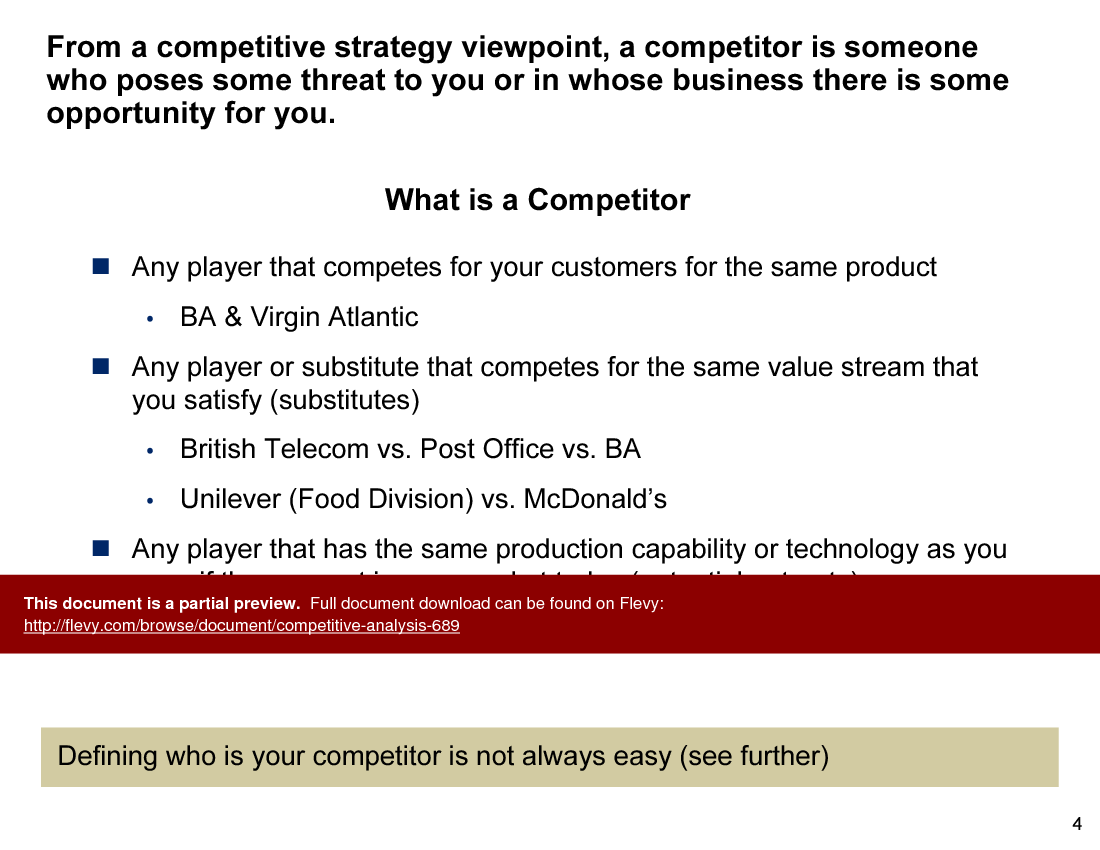
From a competitive strategy viewpoint, a competitor is someone who poses some threat to you or in whose business there is some opportunity for you.
Competitive analysis is...
Crucial to determining the attractiveness of a strategic initiative.
Aims to understand competitors and competitor positioning; this forms the basis for addressing top-level competitive issues.
Critical (though often ignored) element of Strategy Formulation and has become even more critical in Online/Digital Strategy.
This document delves into the intricacies of defining competitors, acknowledging that it's not always straightforward. It categorizes competitors into those vying for the same product, substitutes fulfilling the same value stream, and those with comparable production capabilities. Real-world examples like BA vs. Virgin Atlantic and Unilever vs. McDonald's illustrate these distinctions, emphasizing the complexity of competitive landscapes.
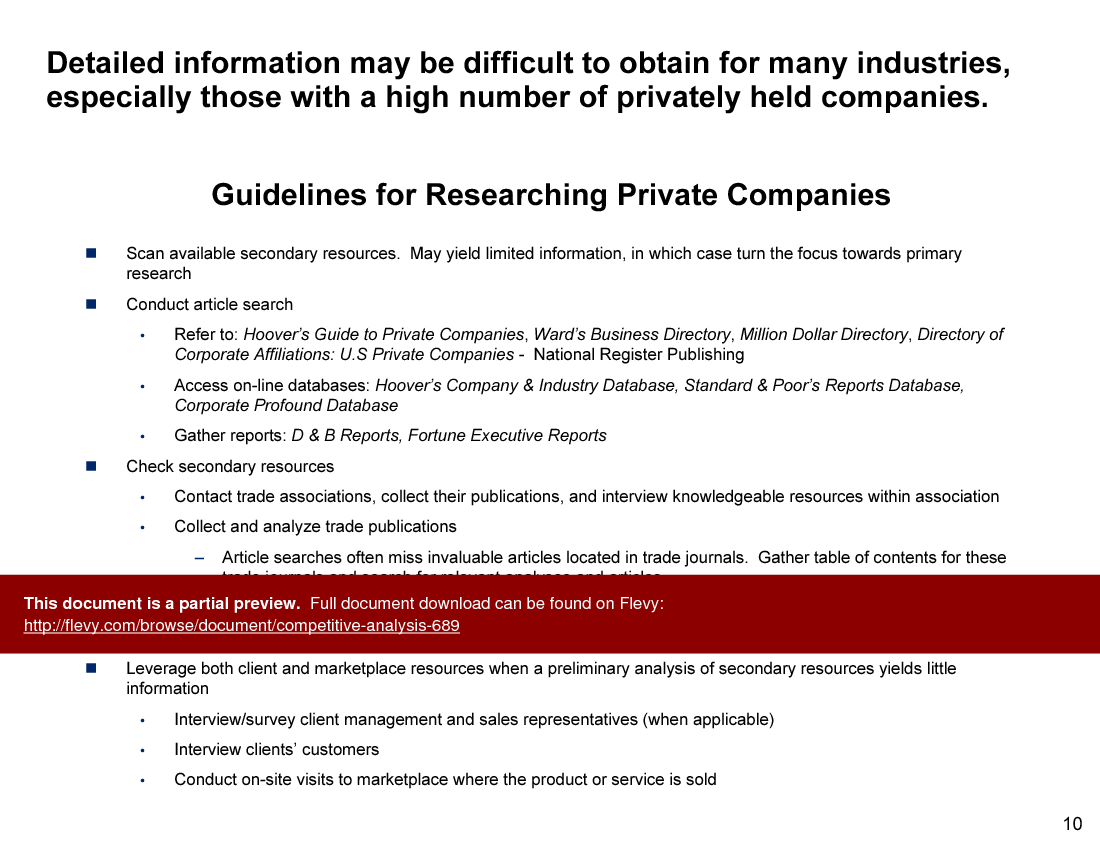
The XYZ Approach to Competitive Analysis offers a structured methodology for dissecting competitive environments. It includes comprehensive guidelines for researching private companies, leveraging both secondary and primary resources. This section is particularly valuable for industries with numerous privately held firms, where data is often scarce. The document outlines key resources like Hoover's Guide and D&B Reports, ensuring thorough and reliable research.
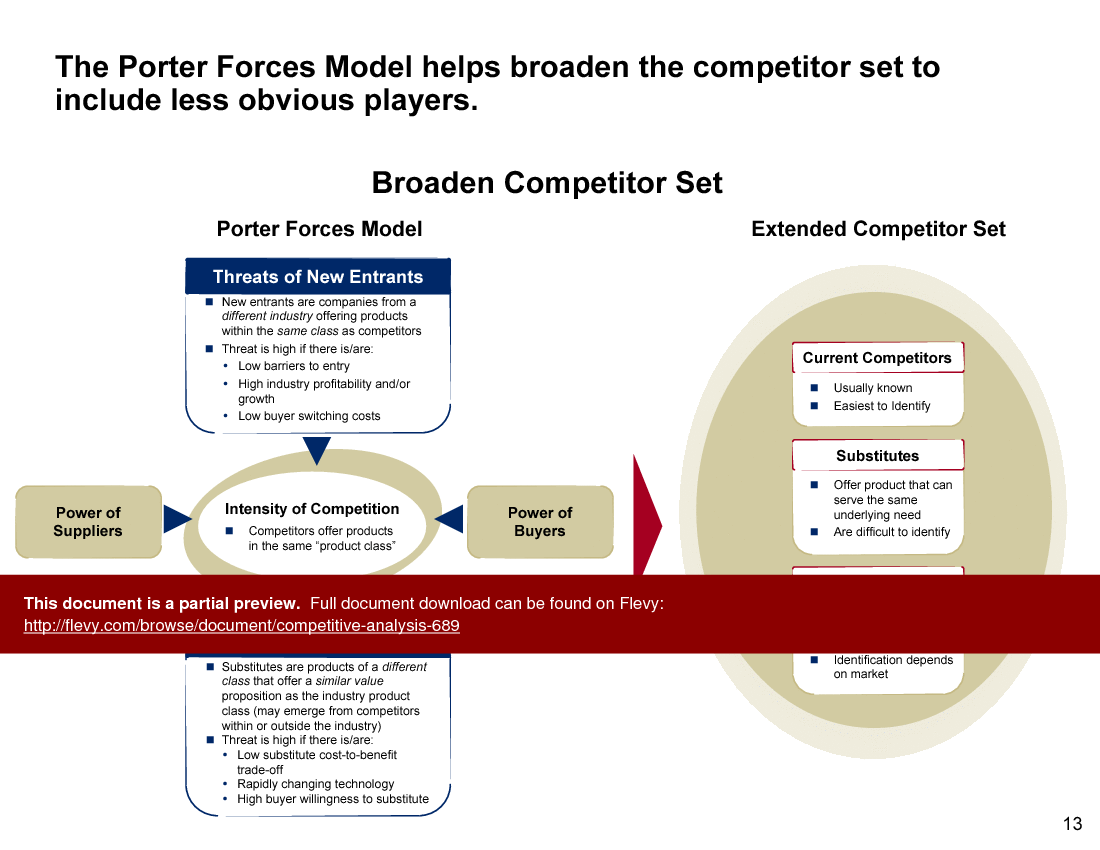
Porter's Five Forces Model is utilized to broaden the competitor set, identifying less obvious players. This model helps in understanding the threats of new entrants, the power of suppliers and buyers, and the intensity of competition. It also highlights the importance of substitutes, which can often be overlooked. This holistic view ensures a robust competitive analysis, providing insights into various market dynamics.
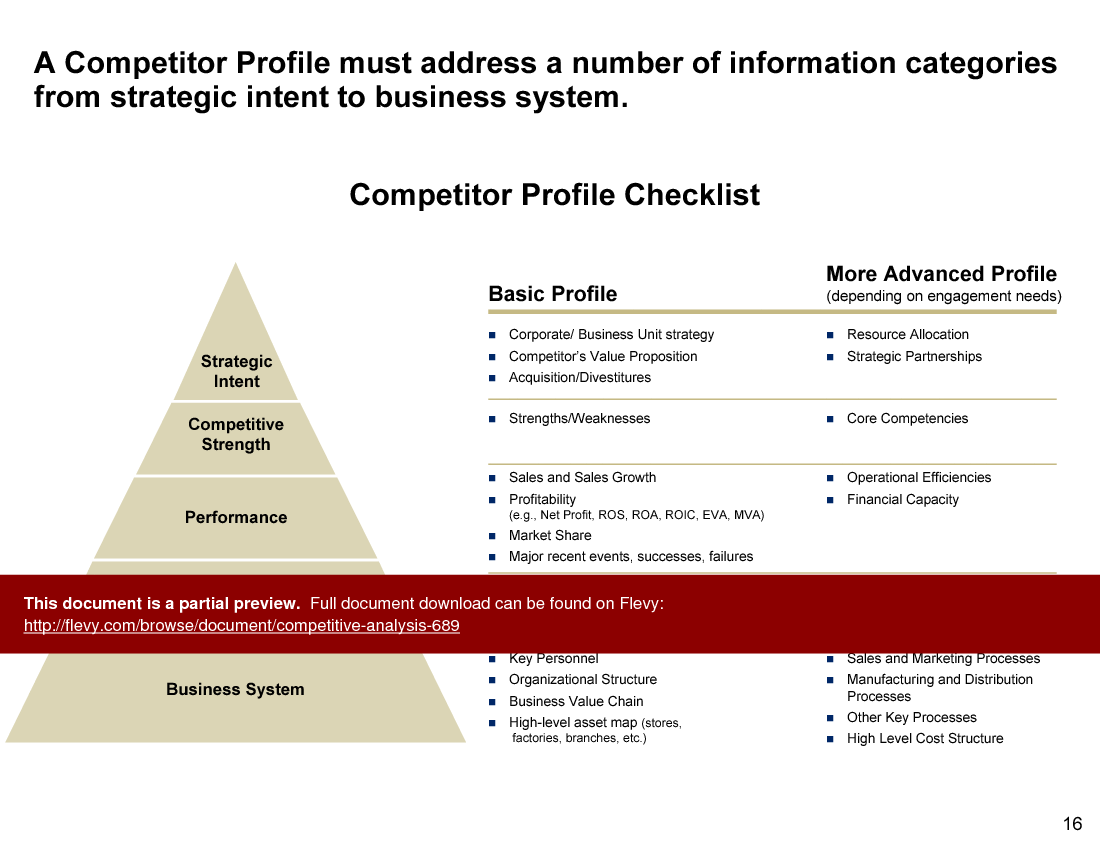
The document also includes a detailed competitor profile checklist, covering aspects from strategic intent to business systems. It emphasizes the need to gather basic and advanced profile information, such as sales growth, market share, and operational efficiencies. This comprehensive approach ensures that all critical facets of competitors are analyzed, providing a solid foundation for strategic decision-making.
Got a question about the product? Email us at support@flevy.com or ask the author directly by using the "Ask the Author a Question" form. If you cannot view the preview above this document description, go here to view the large preview instead.
MARCUS OVERVIEW
This synopsis was written by Marcus [?] based on the analysis of the full 40-slide presentation.
Executive Summary
The Competitive Analysis PPT is a consulting-grade presentation designed to facilitate a thorough assessment of competitors within any industry. This template, structured in a McKinsey, Bain, or BCG-quality format (not affiliated), allows corporate executives and consultants to systematically evaluate competitive positioning and strategic opportunities. Users will be equipped to identify key competitors, analyze their strengths and weaknesses, and formulate actionable strategies to enhance market positioning and shareholder value.
Who This Is For and When to Use
• Corporate strategists and business development teams focused on market positioning
• Competitive intelligence analysts tasked with gathering and interpreting market data
• Senior executives seeking to understand competitive dynamics for strategic decision-making
• Consultants advising clients on market entry or competitive positioning strategies
Best-fit moments to use this deck:
• During strategic planning sessions to evaluate market opportunities
• When assessing the competitive landscape prior to launching new products or services
• In workshops aimed at refining business strategies based on competitive insights
Learning Objectives
• Define the competitive landscape and identify key players within the market
• Analyze competitors’ strengths, weaknesses, and strategic intents
• Develop a framework for ongoing competitive analysis and monitoring
• Establish actionable insights to inform strategic decision-making
• Identify potential threats and opportunities in the competitive environment
• Formulate strategies to enhance market positioning and shareholder value
Table of Contents
• Introduction to Competitive Analysis (page 2)
• Defining Competitors (page 4)
• Competitive Issues for CEOs (page 5)
• Role of Competitive Analysis in Strategy Development (page 6)
• XYZ Approach to Competitive Analysis (page 8)
• Sources of Competitor Analysis Information (page 9)
• Guidelines for Researching Private Companies (page 10)
• Competitor Profile Checklist (page 16)
• Sample Criteria for Competitor Comparison (page 22)
• Case Studies: Retail and Financial Services (page 26)
Primary Topics Covered
• Defining Competitors - Competitors can include direct rivals, substitutes, and potential entrants, making identification crucial for effective analysis.
• Competitive Issues for CEOs - Key questions regarding current and future competitors, performance metrics, and strategic positioning are essential for informed decision-making.
• Role of Competitive Analysis - This analysis serves as a foundation for defining market opportunities and understanding competitor dynamics.
• XYZ Approach - A structured methodology for defining, profiling, and comparing competitors to inform overall strategy formulation.
• Competitor Profile Checklist - A comprehensive framework that includes strategic intent, product offerings, and competitive strengths for effective competitor profiling.
• Case Studies - Real-world examples demonstrating the application of competitive analysis in retail and financial services sectors.
Deliverables, Templates, and Tools
• Competitor profiling template to summarize strategic intent and performance metrics
• Framework for comparative analysis across key evaluation criteria
• Guidelines for sourcing competitor information from various channels
• Case study examples illustrating practical applications of competitive analysis
• Checklist for assessing competitor strengths and weaknesses
Slide Highlights
• Overview of the competitive landscape and key players
• Issue tree breakdown of strategic formulation questions
• Visual representation of competitor positioning using the Porter Forces Model
• Case study insights highlighting competitive advantages and market positioning
• Summary of key findings from competitor analysis in retail and financial services
Potential Workshop Agenda
Competitive Analysis Overview (60 minutes)
• Introduce the importance of competitive analysis in strategy formulation
• Discuss the XYZ approach to competitor profiling and comparison
• Review case studies to illustrate practical applications
Competitor Profiling Session (90 minutes)
• Define the relevant competitor set for the organization
• Profile key competitors using the checklist provided
• Analyze strengths, weaknesses, and strategic intents
Strategy Development Workshop (120 minutes)
• Utilize insights from competitor analysis to inform strategic decision-making
• Identify potential threats and opportunities in the competitive landscape
• Formulate actionable strategies to enhance market positioning
Customization Guidance
• Tailor the competitor set based on specific market dynamics and organizational needs
• Adjust evaluation criteria to align with strategic objectives and industry standards
• Incorporate company-specific terminology and metrics for relevance
Secondary Topics Covered
• Market share analysis and financial performance metrics
• Customer satisfaction and retention strategies
• Competitive positioning opportunities based on behavioral segmentation
• Insights from industry experts and analyst reports
Topic FAQ
What are the main components of a competitive analysis?
A competitive analysis typically defines the competitor set (direct rivals, substitutes, potential entrants), profiles each competitor’s strategic intent, product offerings, strengths, and performance metrics, applies frameworks like Porter’s Five Forces to broaden the set, and uses comparative analysis to identify threats and opportunities, often operationalized via a competitor profile checklist.
How does Porter’s Five Forces fit into competitive analysis?
Porter’s Five Forces is used to broaden the competitor set and reveal less obvious players by assessing threats of new entrants, supplier and buyer power, industry rivalry, and substitutes. It helps identify external pressures and substitutes that can affect positioning, and is presented in the deck as a Porter Forces Model visualization.
What should I include in a competitor profile for strategic planning?
A strategic competitor profile should cover strategic intent, product and service offerings, competitive strengths and weaknesses, performance metrics (sales growth, market share), and business systems or operational efficiencies; these elements are compiled into a competitor profile checklist used for systematic comparison.
What should I look for when buying a competitive analysis template?
Prioritize a template that offers a structured methodology (issue trees or XYZ Approach), ready-to-use profiling templates, sourcing guidance for private-company research, comparative evaluation criteria, and industry case studies to illustrate use—features exemplified by the Competitive Analysis 40-slide PowerPoint.
How can I judge the value of a paid competitive analysis deck versus free resources?
Value typically lies in structured, reusable frameworks, templates for profiling and comparison, explicit sourcing guidance for private companies, and illustrative case studies that save time and ensure coverage; compare deliverables such as a competitor profiling template, Porter Forces visualization, and case study examples.
I need to map competitors before a product launch—what framework should I use?
Start by defining the competitor set including direct rivals, substitutes, and entrants; profile competitors using a checklist covering strategic intent and performance metrics; apply Porter’s Five Forces and a comparative analysis framework to assess positioning—approaches available in Flevy’s Competitive Analysis, including the competitor profiling template.
How often should a company perform competitive analysis activities?
Regular competitive analysis is recommended, with particular emphasis during strategic planning sessions, prior to product launches, and when evaluating market entry initiatives; these trigger moments are highlighted as best-fit uses for systematic analysis in the provided guidance.
How can I research privately held competitors with limited public data?
Use a mix of secondary and primary resources and follow specific guidelines for private-company research; recommended sources include commercial directories and reports such as Hoover’s Guide and D&B Reports, and the Competitive Analysis template provides dedicated guidance for these research approaches.
Document FAQ
These are questions addressed within this presentation.
What is the purpose of competitive analysis?
Competitive analysis helps organizations understand their market position relative to competitors, identify strategic opportunities, and inform decision-making processes.
How do I define my competitors?
Competitors can be defined as any entities that pose a threat to your market share, including direct competitors, substitutes, and potential entrants.
What are the key components of a competitor profile?
A competitor profile should include strategic intent, product offerings, competitive strengths, performance metrics, and insights into their business systems.
How can I use this template for my organization?
This template can be customized to fit your organization’s specific needs by adjusting the competitor set, evaluation criteria, and terminology.
What sources can I use for competitor analysis?
Sources include management interviews, analyst reports, trade publications, and customer feedback.
How often should I conduct competitive analysis?
Regular competitive analysis is recommended, especially during strategic planning sessions, product launches, or market entry initiatives.
What are the benefits of using a structured approach to competitive analysis?
A structured approach ensures comprehensive coverage of the competitive landscape, facilitates informed decision-making, and helps identify strategic opportunities.
Can this analysis be applied to different industries?
Yes, the principles of competitive analysis can be adapted to various industries, although specific criteria and competitors may differ.
What challenges might I face in gathering competitor information?
Challenges include limited access to private company data, rapidly changing market dynamics, and the need for comprehensive analysis across multiple sources.
Glossary
• Competitive Analysis - The process of assessing competitors to understand their strengths, weaknesses, and market positioning.
• Strategic Intent - The overarching goals and objectives that guide a competitor's actions and decisions.
• Market Share - The portion of a market controlled by a particular company or product.
• Porter Forces Model - A framework for analyzing the competitive forces within an industry.
• Competitor Profile - A detailed overview of a competitor's strategic intent, strengths, weaknesses, and market position.
• Behavioral Segmentation - Dividing customers based on their behaviors and decision-making processes.
• Customer Satisfaction - A measure of how products or services meet or exceed customer expectations.
• Financial Performance Metrics - Quantitative measures used to assess a company's financial health and operational efficiency.
• Competitive Positioning - The process of establishing a brand or product in relation to competitors in the market.
• Market Dynamics - The forces that impact the supply and demand of products and services in a market.
• Strategic Opportunities - Potential avenues for growth or competitive advantage identified through analysis.
• Value Proposition - The unique value a product or service offers to customers.
• Cost Structure - The various costs incurred by a business in its operations.
• Revenue Growth - The increase in a company's sales over a specific period.
• Market Entry - The strategy or process of entering a new market with a product or service.
• Competitive Advantage - A condition or circumstance that puts a company in a favorable or superior business position.
• Operational Efficiency - The ability to deliver products or services in the most cost-effective manner without compromising quality.
• Strategic Partnerships - Collaborations between companies to achieve shared objectives.
• Customer Retention - The ability of a company to retain its customers over time.
• Market Positioning - The process of positioning a brand or product in the minds of consumers relative to competitors.
• Product Pipeline - The range of products that a company is developing or planning to launch in the future.
• Competitive Landscape - The overall environment in which competitors operate, including market trends and dynamics.
This PPT slide outlines a competitor analysis framework comprising 3 steps: defining the competitor set, profiling competitors, and comparing and positioning competitors. The analysis sources are divided into 2 categories: methods for gathering data, including consulting company rankings, interviewing management, and utilizing investment analyst reports, and types of materials such as company documents, industry reports, and trade magazines. This dual approach ensures a qualitative and quantitative analysis. Insights highlight the value of management interviews and customer feedback for relevant competitor capability information, while analyst reports provide valuable third-party insights. Annual reports serve as a source for high-level financial analysis, enhancing the depth of the competitor analysis.
This PPT slide presents a value chain analysis of 2 competitors, focusing on Store Design and Site Selection, Procurement and Logistics, Merchandising, Store Operations and Customer Service, and Advertising. Competitor 1 benefits from strategic geographic expansion and advanced distribution technologies, enhancing product delivery efficiency,, but risks reputation damage from rapid expansion. Competitor 2 emphasizes a focused regional strategy and customer shopping experiences, implementing Just-In-Time (JIT) programs to improve distribution, though it faces challenges from regional competitors and lacks sophisticated inventory control systems. In merchandising, Competitor 1 excels with tailored assortments and everyday low pricing, while Competitor 2 struggles with a limited focus on trendy merchandise. Both competitors have strong customer service,, but differ in advertising effectiveness; Competitor 1 is perceived as the lowest price, while Competitor 2 faces legal issues related to false advertising claims.
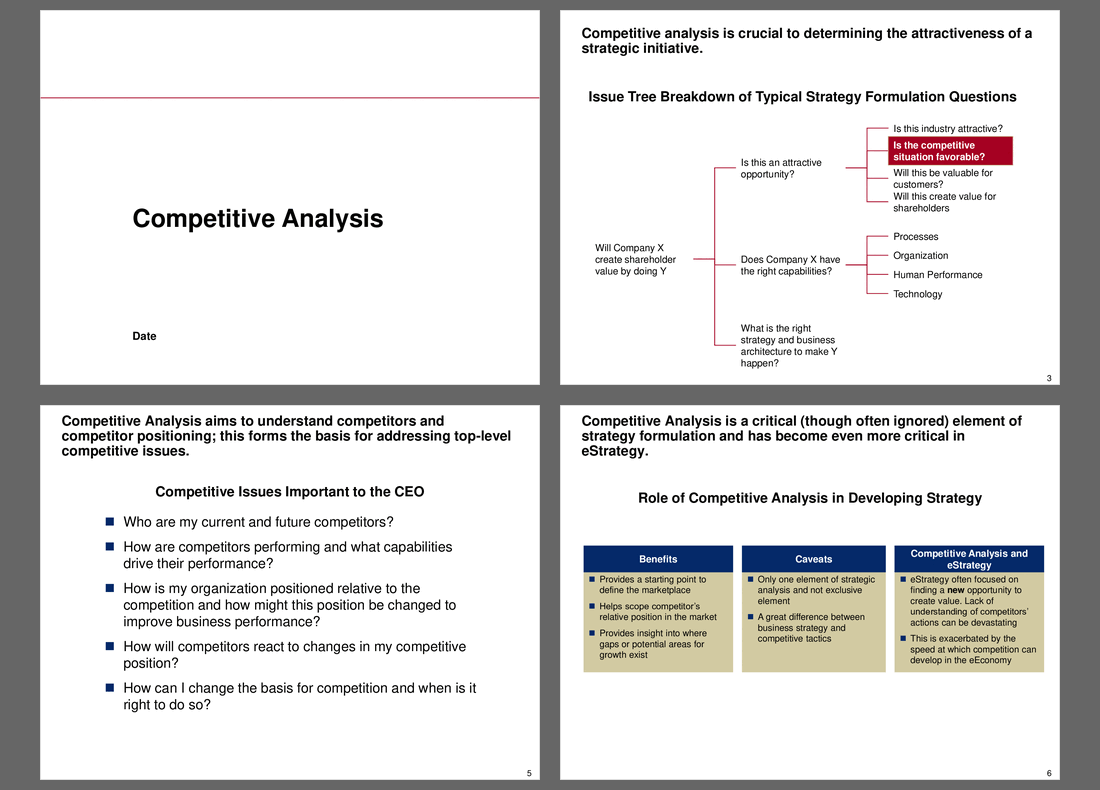
This PPT slide outlines an issue tree for strategy formulation, focusing on competitive analysis to assess the viability of strategic initiatives. The central question, "Is this an attractive opportunity?" branches into 2 inquiries: industry appeal and competitive situation. Evaluating market conditions and internal capabilities is essential. The slide emphasizes the value proposition for customers and shareholders, highlighting the need to understand customer needs and potential shareholder returns. It prompts evaluation of Company X's capabilities across 4 areas: processes, organization, human performance, and technology. This systematic approach guides executives in making informed decisions that align with strategic goals, refining initiatives grounded in market understanding and organizational strengths.
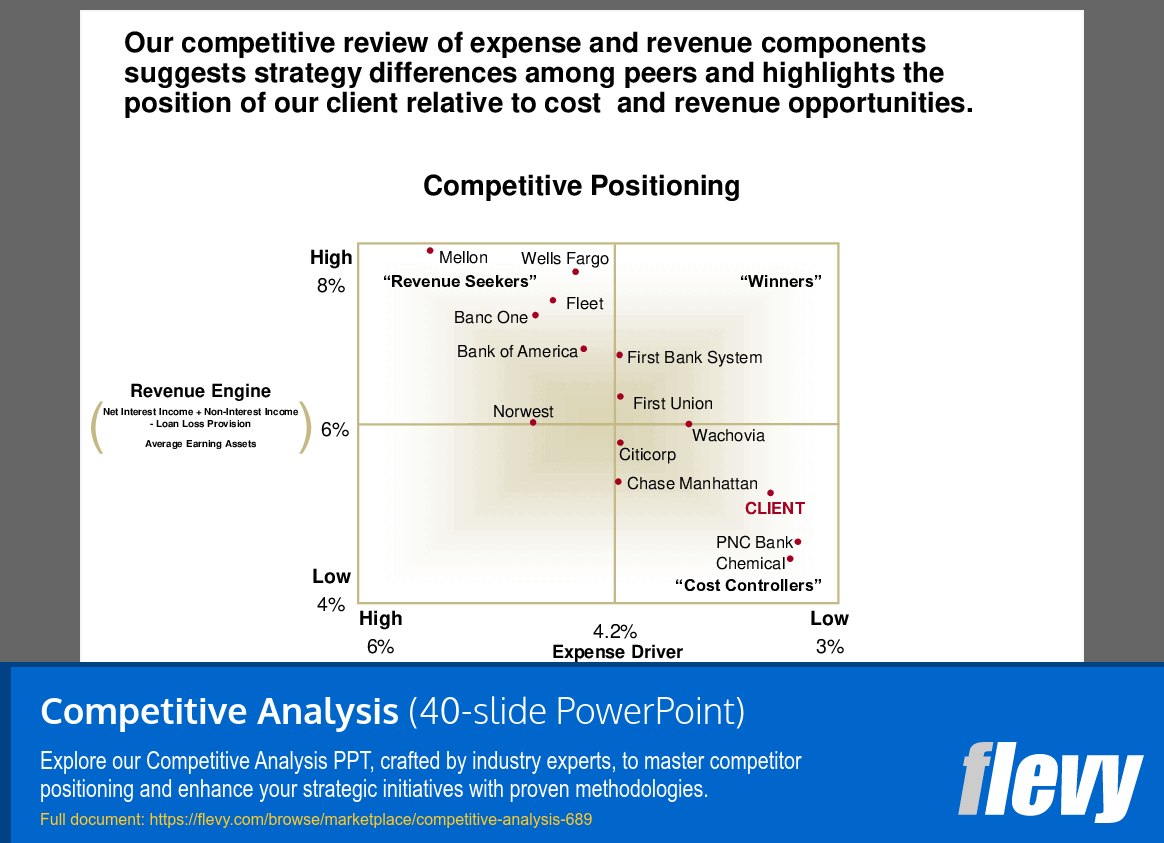
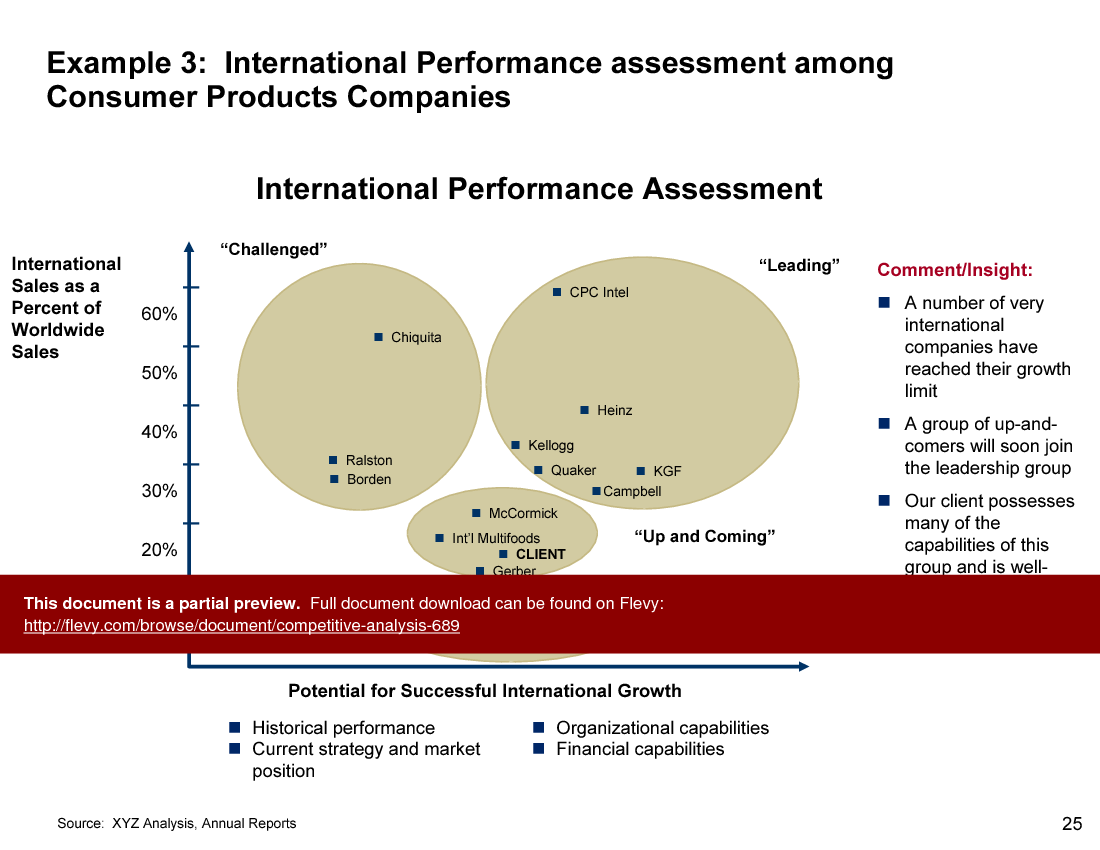
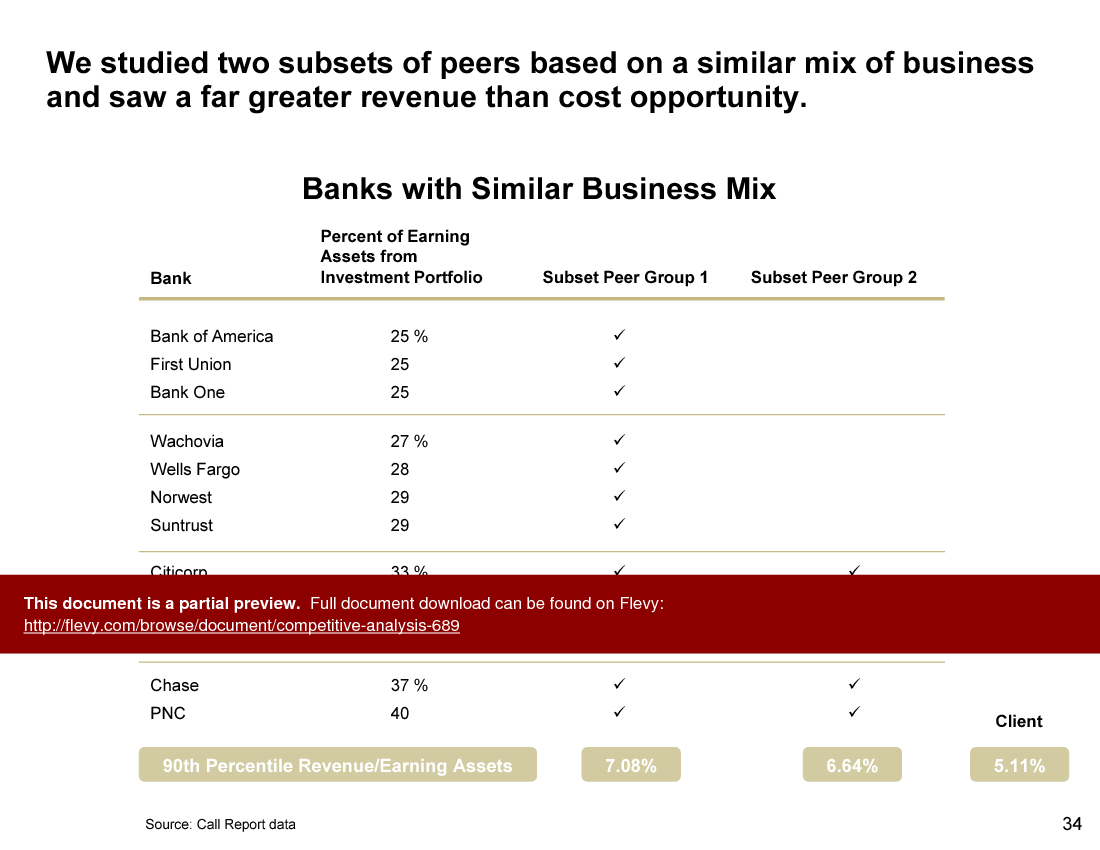
This PPT slide presents a competitive positioning analysis of financial institutions based on expense and revenue strategies. A scatter plot features 2 axes: the vertical axis, "Revenue Engine," includes net interest income, non-interest income, and loan loss provisions, while the horizontal axis, "Expense Driver," reflects expenses as a percentage of revenue. Institutions are categorized into 4 quadrants: "Revenue Seekers," "Winners," "Cost Controllers," and a lower quadrant indicating less effective strategies. The client is positioned in the "Cost Controllers" quadrant, focusing on expense management, but potentially sacrificing revenue growth compared to "Winners." Competitors like Mellon and Wells Fargo are "Revenue Seekers," prioritizing revenue generation, while First Bank System and First Union are "Winners," balancing revenue and cost management. The analysis suggests opportunities for the client to enhance revenue generation strategies.
This PPT slide outlines a structured approach to developing a comprehensive competitor profile using a pyramid framework. At the top, "Strategic Intent" represents competitors' overarching goals, essential for understanding market behavior. Moving down, "Competitive Strength" and "Performance" assess capabilities and operational effectiveness, including sales growth, profitability metrics, and market share. The checklist is divided into Basic Profile and More Advanced Profile. The Basic Profile includes corporate strategy, value proposition, and strengths/weaknesses, while the More Advanced Profile incorporates resource allocation and strategic partnerships. Key metrics such as sales growth, market share, and geographic coverage emphasize the need for a balanced analysis of qualitative and quantitative performance indicators, informing strategic decisions and enhancing competitive positioning.
This PPT slide presents a comparative analysis of 6 healthcare competitors based on 5 key performance indicators: Membership, Cost Position, Employer Service, Geographic Coverage, and Physician Choice. Competitor 1 leads in Membership and Cost Position, indicating strong market presence and effective cost management. Competitor 2 exceeds expectations in several areas, while Competitor 3 meets most needs without excelling. Geographic Coverage shows Competitor 4 spans 6 counties, enhancing reach. Competitor 5 offers over 2,000 primary care physicians, appealing to customers seeking extensive healthcare options. The Strategic Focus column reveals Competitor 1 prioritizing Network Rationalization, while others focus on Membership Growth and Diversification, aligning with market demands. This analysis aids stakeholders in assessing competitors' strengths and weaknesses in the healthcare market.
This PPT slide provides an overview of a Business System framework, focusing on key components of a competitor's operations: manufacturing, distribution, and marketing. The manufacturing section highlights bulk production in a chemical plant, emphasizing investment in state-of-the-art facilities for innovation and efficiency. In distribution, it notes that 40% of U.S. sales were indirect as of 1994, indicating reliance on wholesalers and distributors for market penetration. The U.S. product pipeline includes ten products in development, showcasing a proactive approach to product innovation. Value-added services such as education, training, and marketing tactics enhance customer engagement and differentiation. Strong leadership within the management team drives organizational effectiveness, underscoring the interconnectedness of business processes in competitive dynamics.
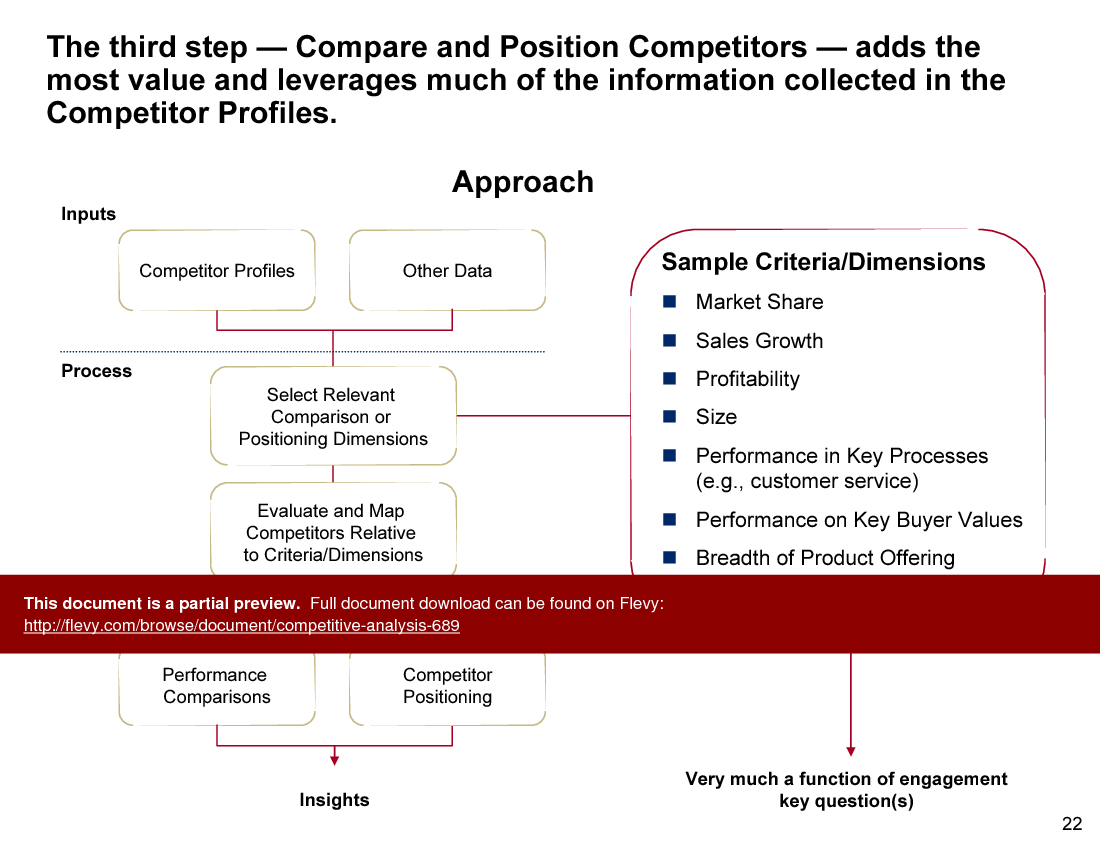
This PPT slide outlines a structured approach to competitive analysis, focusing on defining, profiling, and comparing competitors. The process begins with 3 starting points: a key question, an issue tree, and a research plan. The first section, "Define the Relevant Competitor Set," emphasizes establishing a competitive set and screening criteria to direct analysis toward pertinent competitors, addressing challenges in identifying new entrants. The "Profile Competitors" phase summarizes competitor performance, strategic intent, strengths, weaknesses, and product offerings using a tailored framework. Finally, "Compare and Position Competitors" evaluates competitors along criteria such as capabilities and customer attributes to identify threats and opportunities. Insights from this analysis shape overall strategy and enhance market positioning.
This PPT slide presents the Porter Forces Model, which enhances understanding of the competitive environment by identifying direct competitors and less obvious market players. It categorizes competitors into current competitors, substitutes, and new entrants. The "Threat of New Entrants" highlights companies from different industries offering similar products, influenced by low barriers to entry, high industry profitability, and low buyer switching costs. The "Intensity of Competition" indicates that rivalry increases among competitors within the same product class, affecting strategic positioning and resource allocation. The "Threat of Substitutes" refers to products from different classes that fulfill similar needs, necessitating broader analysis. The "Extended Competitor Set" includes current competitors, substitutes, and new entrants, emphasizing the need for vigilance regarding potential disruptors in the market.
This PPT slide presents a strategic overview of buyer value positioning for a telecommunications client across 4 dimensions: Product Performance, Price, Service, and Product Line Breadth. The client is positioned towards the high end of Product Performance, indicating strong offerings that can be leveraged in marketing strategies. Positioned at a low price point, the client adopts a cost-effective strategy appealing to price-sensitive customers, though this raises concerns about perceived value. In Service, the client excels, providing a competitive edge in customer service. The Product Line Breadth indicates a specialty focus, suggesting strength in niche markets. Overall, the slide identifies positioning opportunities, emphasizing alignment of product strengths with market needs and refining pricing strategy to enhance perceived value.
Competitive analysis is essential for strategic development, particularly in eStrategy. It defines the marketplace, aids in understanding competitor positioning, and identifies growth opportunities. However, it is only one component of a broader strategic analysis framework and should not dictate overall strategy. Distinguishing between business strategy and competitive tactics is crucial for effective formulation. In the context of eStrategy, competitive analysis connects insights to the fast-paced digital economy, where identifying new value creation opportunities is vital. A lack of awareness regarding competitors can lead to setbacks, especially given the rapid evolution of competition in the digital landscape, highlighting the need for timely competitive analysis.
This PPT slide focuses on defining a competitor set for effective market analysis, emphasizing the identification of key players and fastest-growing entities based on value and volume metrics. It illustrates market share dynamics for the years 1993 and 1998, highlighting percentage changes in market value shares among competitors. For example, Company A shows a significant increase in value share, while others experience varying declines or growth. The lower section mirrors this analysis for market volume shares, revealing fluctuations over the same period. Additionally, the slide lists competitors with their respective compound annual growth rates (CAGR) for value and volume, essential for assessing current standings and growth trajectories, informing market entry or expansion strategies.
Source: Best Practices in Competitive Analysis, Positioning PowerPoint Slides: Competitive Analysis PowerPoint (PPT) Presentation Slide Deck, Documents & Files
Since 2012, we have provided business templates to over 10,000 businesses and organizations of all sizes, from startups and small businesses to the Fortune 100, in over 130 countries.
"I have used FlevyPro for several business applications. It is a great complement to working with expensive consultants. The quality and effectiveness of the tools are of the highest standards."
– Moritz Bernhoerster, Global Sourcing Director at Fortune 500
"As a young consulting firm, requests for input from clients vary and it's sometimes impossible to provide expert solutions across a broad spectrum of requirements. That was before I discovered Flevy.com.
Through subscription to this invaluable site of a plethora of topics that are key and crucial to consulting, I
have been able to exceed expectations and deliver quality advice and solutions to my clients. The quality and expertise of the authors are exemplary and gives me great confidence to use as part of my service offerings.
I highly recommend this company for any consultant wanting to apply international best practice standards in their service offerings.
"
– Nishi Singh, Strategist and MD at NSP Consultants
"I am extremely grateful for the proactiveness and eagerness to help and I would gladly recommend the Flevy team if you are looking for data and toolkits to help you work through business solutions."
– Trevor Booth, Partner, Fast Forward Consulting
"I like your product. I'm frequently designing PowerPoint presentations for my company and your product has given me so many great ideas on the use of charts, layouts, tools, and frameworks. I really think the templates are a valuable asset to the job."
– Roberto Fuentes Martinez, Senior Executive Director at Technology Transformation Advisory
"Flevy is now a part of my business routine. I visit Flevy at least 3 times each month.
Flevy has become my preferred learning source, because what it provides is practical, current, and useful in this era where the business world is being rewritten.
many challenges and there is the need to make the right decisions in a short time, with so much scattered information, we are fortunate to have Flevy. Flevy investigates, selects, and puts at our disposal the best of the best to help us be successful in our work.
"
– Omar Hernán Montes Parra, CEO at Quantum SFE
"Flevy is our 'go to' resource for management material, at an affordable cost. The Flevy library is comprehensive and the content deep, and typically provides a great foundation for us to further develop and tailor our own service offer."
– Chris McCann, Founder at Resilient.World
"One of the great discoveries that I have made for my business is the Flevy library of training materials.
As a Lean Transformation Expert, I am always making presentations to clients on a variety of topics: Training, Transformation, Total Productive Maintenance, Culture, Coaching, Tools, Leadership Behavior, etc. Flevy
It is well worth the money to purchase these presentations. Sure, I have the knowledge and information to make my point. It is another thing to create a presentation that captures what I want to say. Flevy has saved me countless hours of preparation time that is much better spent with implementation that will actually save money for my clients.
"
– Ed Kemmerling, Senior Lean Transformation Expert at PMG
"FlevyPro has been a brilliant resource for me, as an independent growth consultant, to access a vast knowledge bank of presentations to support my work with clients. In terms of RoI, the value I received from the very first presentation I downloaded paid for my subscription many times over! The
quality of the decks available allows me to punch way above my weight – it's like having the resources of a Big 4 consultancy at your fingertips at a microscopic fraction of the overhead.
"
– Roderick Cameron, Founding Partner at SGFE Ltd
Save with Bundles

This document is available as part of the following discounted bundle(s):
Download our free compilation of 50+ Strategy & Transformation slides and templates. Frameworks include McKinsey 7-S, Balanced Scorecard, Disruptive Innovation, BCG Curve, and many more.